 Executive Search
 Non-executive Search
 Management Due Diligence
 Market Mapping
 Remuneration Benchmarking
 Psychometric and Ability Testing
 Executive and Non-executive Education
 Built Environment and Support Services
 Consumer
 Energy Transition
 Engineering and Manufacturing
 Financial Services
 Private Equity and Venture Capital
 Professional Services
 Public Sector and Not For Profit
 Technology and Life Sciences
 Chair and Non-Executive Director
 CEO
CEO CFO and Financial Management
 Operations and General Management
 Commercial
 Human Resources
 IT, Digital and Technology
 Manufacturing, Supply Chain and Logistics
 Legal and Governance
Contact the team at FWB to discuss your individual or company requirements, or to discover more about our specialist services.
The Power of a Connected Legal Community
Events
18 December 2025
- FWB Events

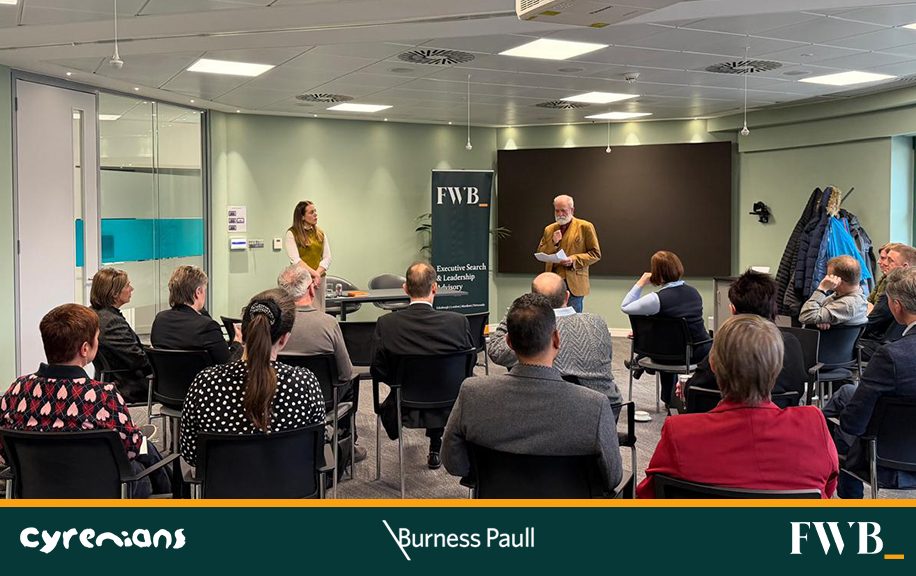
Earlier this month, we delivered our first GC roundtable in Aberdeen, in partnership with the GC Scot network. Hosted by Greg Bargeton, Chair of GC Scot, and Katie Gilmartin, Director at FWB, we welcomed a group of senior legal leaders from across Aberdeen’s energy and financial services sectors.
What unfolded was an insightful discussion around the reality of legal leadership in-house — the pressure points, the impact of constant policy and regulatory changes, how the legal function is perceived internally, and what the next generation of lawyers might look like.
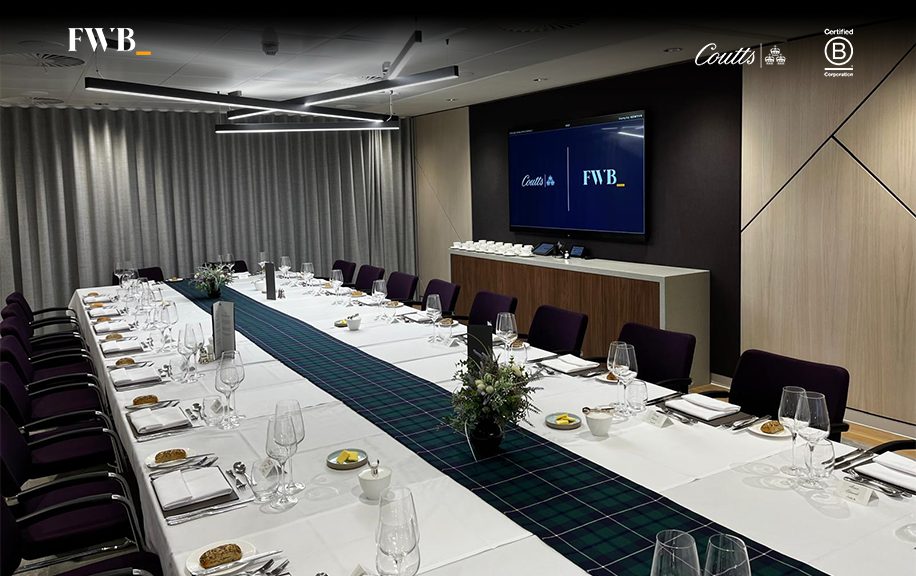
Below are just some of the themes we explored over a warm meal on a cold winter’s night in Aberdeen.
The impact of AI
It seems no discussion is complete without the mention of AI at the moment, and this conversation was no exception. A provocation was posed around what the future of in-house lawyering will look like if AI is to replace a large percentage of work.
Participants broadly agreed that AI is likely to affect in-house legal teams later than private practice, largely because in-house work is more varied and often less suited to automation. Some noted that AI may be particularly valuable for parts of the business with limited or no legal resource, but its usefulness will differ significantly across functions.
Several attendees also raised concerns about the impact of increased AI adoption on trainee development and future skills pipelines. A key question emerging from the discussion was how organisations will continue to justify the cost of specialist legal expertise if they come to rely heavily on AI systems.
Despite advances in AI, this human-led expertise remains essential, and spend has not materially decreased for most organisations.
Other comments highlighted that the group has not yet seen the cost savings from AI tools that some external counsel have promoted.
Talent attraction and retention
There are some challenges in attracting junior private practice lawyers due to significant pay inflation, especially at NQ level and particularly influenced by the London market.
However, the draw of in-house roles remains largely unchanged. Most people move in-house for the broader exposure, long-term involvement in the business, and the chance to contribute more consistently to a particular business rather than dipping in and out of matters for multiple clients. Generalists are made in-house — and many find that appealing.
Because of this, salary alone isn’t shifting the talent market dramatically. Those motivated to build an in-house career typically make the move eventually, so most attendees reported no major concerns in attracting the right people in the long run.
Many shared memories of their early private practice days — a culture of always saying “yes,” taking on everything, and working late without hesitation. In contrast, younger lawyers today are more measured in how they take on work and more willing to stand up for boundaries.
While some expressed concern about how this might affect pace or output, there was also real respect for the confidence younger lawyers bring. Many felt this could lead to quicker, stronger, and more transparent relationships across the business.
On development, larger organisations spoke about mentoring programmes, cross-functional exposure, and international rotations. But for many in Aberdeen — particularly sole counsel — development requires creativity, networking, and external support, which again underlines the value of communities like GC Scot.
The role of the legal function
Legal leaders emphasised the importance of being part of every senior conversation — board meetings, executive discussions, operational reviews — so that legal insight guides decisions rather than arriving afterwards to course-correct.
In the energy sector specifically, many leaders also highlighted the value of spending time on-site: meeting managers, understanding operations, and demonstrating that Legal is present not as a blocker, but as a genuine partner in mitigating risk to keep people and the business safe.
Most participants outlined a structured monthly reporting process as the primary mechanism for providing assurance to the board. This typically includes formal board papers from legal, DLO (Delegated Legal Oversight) updates, and regular GC reports that track key risks, ongoing matters, and emerging issues.
In addition to board-level reporting, legal leaders also provide routine updates to senior business leaders to ensure alignment and early visibility of potential challenges. One GC from a smaller organisation noted that, although their structure is more compact, they follow a similar governance process to that of another attendee from a much larger, global corporate – delivering the same level of rigour but scaled to the size and complexity of their business.
Instructing/engaging with legal firms
Specialist expertise remains a key value driver — especially around rapidly evolving areas like environmental regulation, compliance, and AI. Firms also support with training, benchmarking, workshops, and broader commercial insights.
Many attendees noted that they rely on law firms not only to support and coach their legal teams, but also to upskill the wider business on policy changes and regulatory developments.
They also noted that external hourly rates are significantly higher than in the past – one reason why many organisations in Aberdeen are using fewer secondees – and several attendees added that they are facing increased internal cost pressures around the use of external counsel.
Strengthening Scotland’s In-House Legal Community
The evening reinforced that Scotland’s in-house legal community is collaborative, and eager to support one another – but the opportunities and forums to come together and connect meaningfully are limited.
The GC Scot network is helping change that.
If you would like to find out more about the GC Scot community, take part in future roundtables, or simply connect with other in-house leaders across Scotland, you can get involved in GC Scot by contacting Katie Gilmartin at FWB for more information.