 Executive Search
 Non-executive Search
 Management Due Diligence
 Market Mapping
 Remuneration Benchmarking
 Psychometric and Ability Testing
 Executive and Non-executive Education
 Built Environment and Support Services
 Consumer
 Energy Transition
 Engineering and Manufacturing
 Financial Services
 Private Equity and Venture Capital
 Professional Services
 Public Sector and Not For Profit
 Technology and Life Sciences
 Chair and Non-Executive Director
 CEO
CEO CFO and Financial Management
 Operations and General Management
 Commercial
 Human Resources
 IT, Digital and Technology
 Manufacturing, Supply Chain and Logistics
 Legal and Governance
Contact the team at FWB to discuss your individual or company requirements, or to discover more about our specialist services.
Give To Gain: Reflections on 40 Years of Progress and the Future of Women’s Leadership
DEI
9 March 2026
- Thought Leadership
How generosity, sponsorship and shared responsibility are shaping the next generation of leaders and why it matters now more than ever.
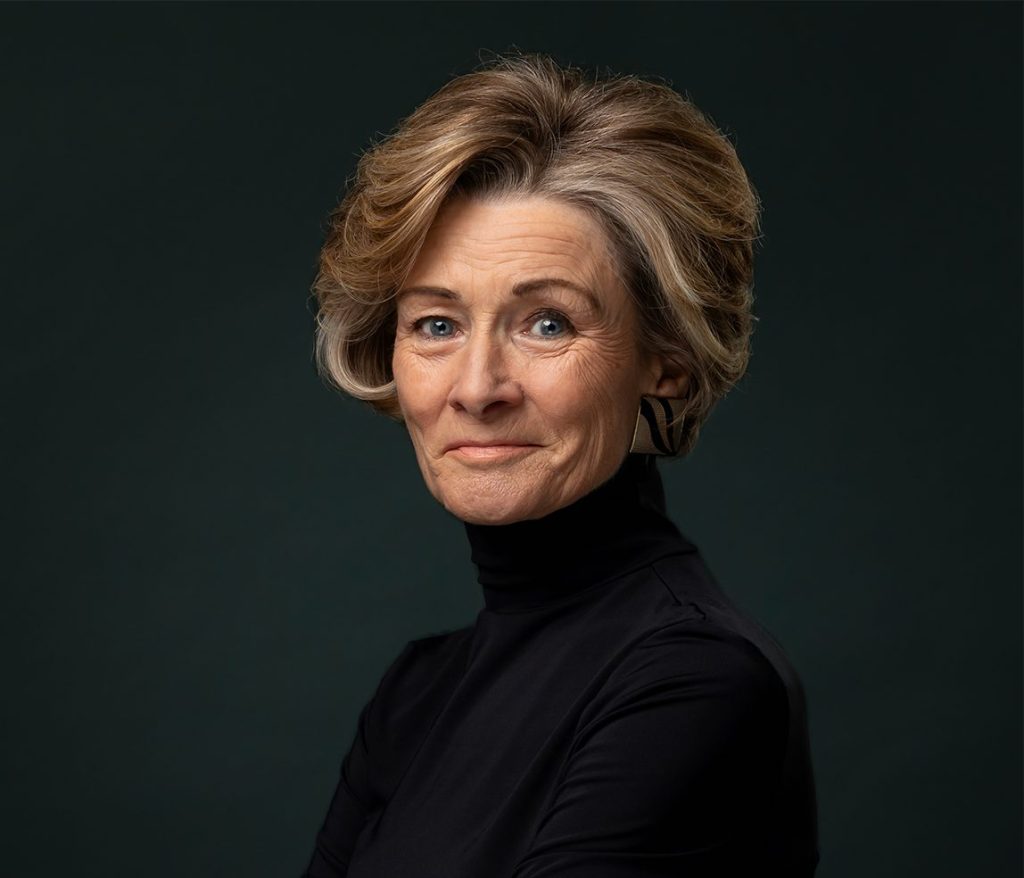
As International Women’s Day 2026 embraces the theme Give To Gain, we spoke with Judy Wagner, co-founder of FWB, to reflect on four decades of progress in women’s leadership and the work still required to build a more equitable future. This year also marks the 10th anniversary of FWB’s Executive Women in Leadership (EWIL) programme, a milestone that reinforces the firm’s long-standing commitment to developing diverse leadership talent.
In preparation for this conversation, Judy spoke to several EWIL alumnae, as well as some of the experienced female Chairs and NXDs in our network, to gather candid reflections on what has changed, what hasn’t, and what leaders must now “give” to ensure the next generation can “gain.”
Q1. Looking back over the past 40 years, what do you see as the most significant turning points for women in leadership?
“Legislation has played an important role. Equal pay, gender pay gap reporting, shared parental leave and independent taxation for women all set essential safeguards. But the most meaningful shifts have been cultural.
“When I started out, bias was overt. Appearance could influence whether you secured an interview. Today, bias hasn’t disappeared, but it is far less tolerated. Transparency and public accountability have changed expectations.
“Visibility has also been critical. Women are now present in boardrooms, in CEO roles and in public life. When St Andrews appointed Dame Anne Pringle as its first female Chancellor in 600 years, it symbolised a broader truth: women are no longer the exception.
“But progress is not linear. For every breakthrough, we’ve seen backlash. From MeToo to political polarisation and DEI rollbacks. The forces resisting female authority don’t vanish; they adapt.”
Therefore, it was felt that progress is real but fragile. Many described a sense that “the surface has shifted, but the structures haven’t fully caught up.”
Q2. Has progress been driven more by legislation, corporate culture, or individual leadership?
“All three matter, but in different ways.
- Legislation sets minimum standards.
- Corporate culture determines the pace.
- Individual leadership creates the real inflection points.
“You can comply with legislation without improving opportunity. Progress happens when leaders intentionally sponsor talent, challenge assumptions and make bold succession decisions.
“One uncomfortable truth is that organisations still reward masculine-coded behaviours, including certainty, visibility, and dominance. Women who rise often do so by adapting to these norms rather than reshaping them.
“True equality won’t come when extraordinary women succeed. It will come when average women rise as often as average men.”
This aligns closely with ‘Give To Gain’: giving opportunity, sponsorship, and belief. Not only to exceptional women, but to the many capable women who are still overlooked.
Q3. From your experience, what has actually worked in getting more women into senior roles?
“Three factors consistently make the difference:
1. Sponsorship over mentoring
Mentoring builds confidence. Sponsorship builds careers. Women rarely reach senior roles without a sponsor (often male) because power networks remain male-dominated.
2. Transparent succession planning
When boards measure diversity outcomes and hold leaders accountable, progress accelerates.
3. Flexible working and visible role models
Hybrid working has widened access. And seeing women lead authentically, without conforming to outdated norms, has been transformative.
“But we must also recognise the invisible labour women carry, often disproportionately women, including emotional load, cultural cohesion, conflict mediation, and onboarding. Onboarding processes can be more challenging for those who do not see themselves fully reflected in organisational structures or who encounter implicit bias or limited long-term support. Many women and other underrepresented groups describe investing significant effort in understanding company culture and building relationships, yet these contributions are often overlooked in standard onboarding processes. Organisations depend on this work yet rarely reward it.”
Many of those Judy spoke to described “holding the baby,” both literally and metaphorically, and the career hesitation that can follow. Others spoke about the confidence gap: men still put themselves forward more readily for development opportunities.
These insights underline ‘Give To Gain’: when leaders give sponsorship, flexibility and recognition, women gain the space to progress.
Q4. Has digital transformation reshaped opportunities for women?
“Yes, but unevenly.
“Digital transformation has enabled flexible and remote working, allowing women to build careers without being bound by geography or by expectations to be physically present in the workplace. It has opened new pathways in entrepreneurship, consulting, and portfolio careers.
“But it has also blurred boundaries. The ‘always‑on’ culture disproportionately affects women who still carry the majority of domestic and emotional labour at home.
“Technology hasn’t neutralised inequality; it has layered over it.”
Several of those surveyed noted that while hybrid working has been a lifeline, it has also created visibility challenges. Men returned to offices more quickly post‑Covid, while many women balanced home and work life, sometimes at the cost of being “seen.”
Q5. Has progress been evenly distributed across sectors? What still needs to be addressed?
“No. Some sectors, including professional services, public sector leadership, and higher education, have moved faster. Others, such as manufacturing, construction, and parts of financial services, still lag behind.
“The biggest gaps are structural. We need to surface the invisible dynamics that shape careers:
- Power networks
- Sponsorship patterns
- Emotional labour
- Pay disparities
- Assumptions about ambition and motherhood
“If we don’t make the invisible visible, young women will internalise what is actually systemic.”
Regularly highlighted was the “HR trap”: women who care about culture and inclusion often end up concentrated in people functions. These are vital roles, but it is not where capital allocation decisions are made.
Q6. Do you feel leaders today are ensuring the next generation gains more than we did? What more can they do?
“Yes and no.
“Leaders today are more aware, and the next generation is less willing to accept outdated norms. But we’re also seeing fatigue. Some leaders feel overwhelmed by the pace of change.
“What we need now is a new narrative… One that inspires people about what is possible.”
It was felt that many younger women are ambitious but cautious, balancing career progression with family responsibilities. They thrive under leaders who give flexibility, trust and sponsorship and struggle under those who don’t.
Giving to Gain: What this year’s IWD theme means for FWB
For more than 30 years, FWB has been committed to advancing gender diversity across leadership teams, boards, and organisations of every size. As a female-founded firm, we have championed women in leadership since day one.
The Executive Women in Leadership (EWIL) programme, now marking its 10th anniversary, was created to give women the confidence, capability, and a community to lead. Its evolution into the Executive Leadership Programme (ELP), delivered with the University of Edinburgh Business School, reflects our ambition to support leaders of all genders while maintaining a strong focus on inclusion. Over the last decade, our leadership programmes have welcomed more than 1,000 delegates.
In October, FWB joined the sixth cohort of the Pathways Pledge , a national programme to dramatically increase women’s participation in the entrepreneurial economy. FWB is proud to be the first recruitment firm to join the initiative.
These commitments are grounded in our values at FWB and are part of our continued work to ensure leadership opportunities are accessible and supported by strong communities across Scotland and beyond.
Our Collective Call to Action
Give To Gain is more than a theme; it is a call to action. In our experience, when leaders give time, opportunity, sponsorship, visibility and belief, both women and organisations gain. As Judy reflected, progress is real but still uneven. The next chapter depends on what each of us is willing to contribute, including sharing knowledge, opening networks, and creating roles that work for people with a range of responsibilities and lived experiences.
FWB will continue to play its part through search, assessment, and executive education, partnering with clients to build leadership teams that reflect the world they serve.
Across our work, one truth is clear: when organisations give intentionally, they gain exponentially. Diversity strengthens decision-making, culture and long-term performance. By investing in people, widening opportunities, and supporting leaders at all stages of their journey, we can help build workplaces where talent in all its forms has the opportunity to rise.
Take Action
Executive and Non-Executive Hiring
Talk to us about executive and non-executive hiring by emailing enquiries@fwbltd.comor calling 0131 539 7087.
Executive Education
Executive Leadership Programme 2026
Join our ELP cohort this year (applications are now open for September 2026). Designed for leaders preparing for greater responsibility, ELP offers a rigorous, collaborative, and transformative development experience. Delivered in partnership with the University of Edinburgh Business School, it equips leaders to navigate complexity, lead authentically and create meaningful impact.
Non-Executive Director Programme 2026
Our Non‑Executive Director Development Programme is also returning this year (running online bi‑weekly from September 2026). Designed for aspiring and practising NXDs, the programme offers a highly practical, insight‑rich learning experience led by experienced Chairs and board directors. Delivered in partnership with the University of Edinburgh Business School, it equips participants to navigate evolving governance challenges, strengthen boardroom effectiveness and contribute confidently at a strategic level.
.
If you’re ready to invest in your leadership — and in the leaders who will follow you — we invite you to join us.
Join our Professional Networks
Our leadership networks bring together forward-thinking professionals across Scotland to learn, collaborative and influence positive change.
Scottish HR Leadership Group (SHRLG)
For HR Directors, Heads of People and senior HR leaders across Scotland.
Join by emailing: info@scottishhrlg.com
Scottish Finance Leaders Network (SFLN)
For CFOs, Finance Directors, and senior finance leaders across Scotland.
Join by emailing: sfln@fwbltd.com
Pathways Pledge Network
A growing community for women across Scotland, designed to strengthen connection, confidence and career progression.
Express interest by emailing: events@fwbltd.com